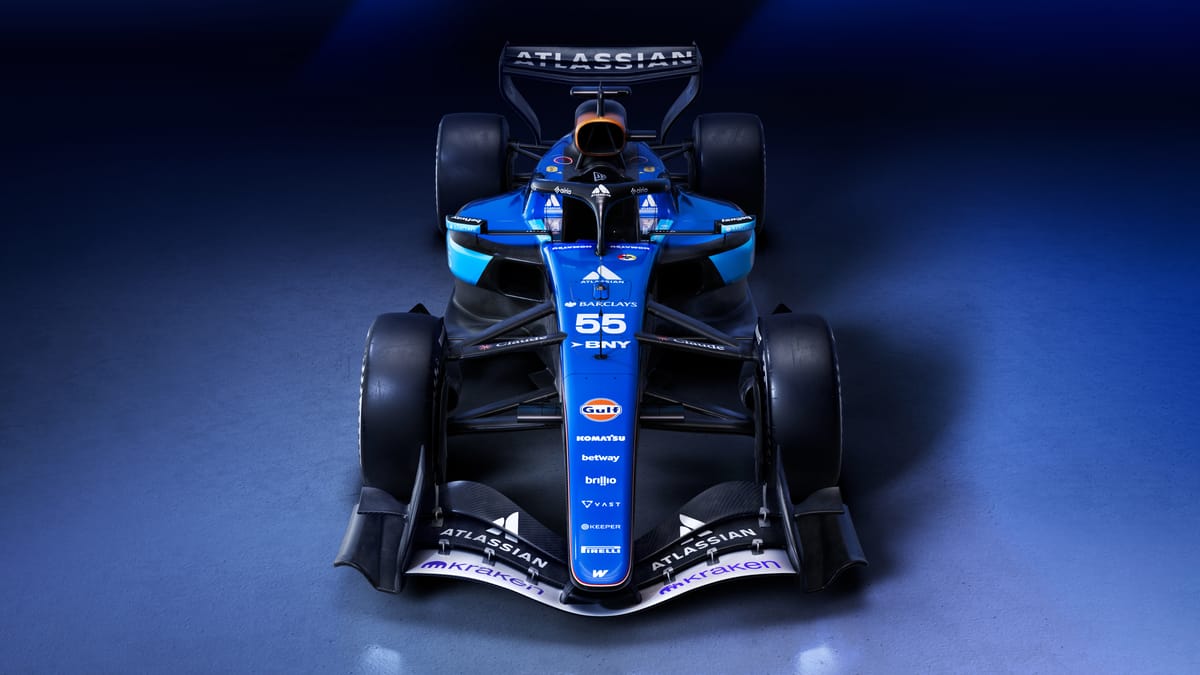
Williams has revealed their upcoming 2026 Formula 1 showcar, showcasing a groundbreaking design concept that departs from conventional aerodynamics. The most notable feature of this vehicle is its 'zero-rods' configuration, a term that refers to the absence of traditional supporting rods and elements used in aerodynamic structures.
This innovative approach aims to optimize airflow and reduce drag, potentially offering a new direction for F1 car design. The zero-rods concept involves integrating aerodynamic elements directly into the chassis and bodywork, eliminating the need for external support structures that typically disrupt airflow.
Engineers and designers at Williams have focused on creating a seamless surface that enhances downforce while maintaining minimal resistance. This design not only improves performance but also aligns with the upcoming technical regulations aimed at promoting closer racing and better safety standards.
By removing traditional rods and supports, the car's structure becomes more streamlined, allowing for more precise airflow management. This could lead to increased stability at high speeds and more effective cooling of critical components such as the brakes and power unit.
The development process involved extensive computational fluid dynamics (CFD) simulations and wind tunnel testing to validate the zero-rods concept. The results have shown promising improvements in aerodynamic efficiency, which Williams hopes will translate into competitive advantages on the track.
Williams' innovation reflects a broader trend within Formula 1 to push technological boundaries and explore alternative design philosophies. As the sport moves toward the 2026 regulations, teams are experimenting with novel ideas to gain an edge, and Williams' zero-rods showcar is a prime example of this innovative spirit.
While the car is still in the development phase, the early indications suggest that Williams is on the right track to redefine F1 aerodynamics. Fans and industry experts alike are eager to see how this design performs in real-world conditions once it hits the track in the upcoming seasons.